
Sleep & Recovery
Sleep Patterns and Morning Energy: A Week of Observations for Active Men
Adam Rahman · 12 February 2026 · 9 min read
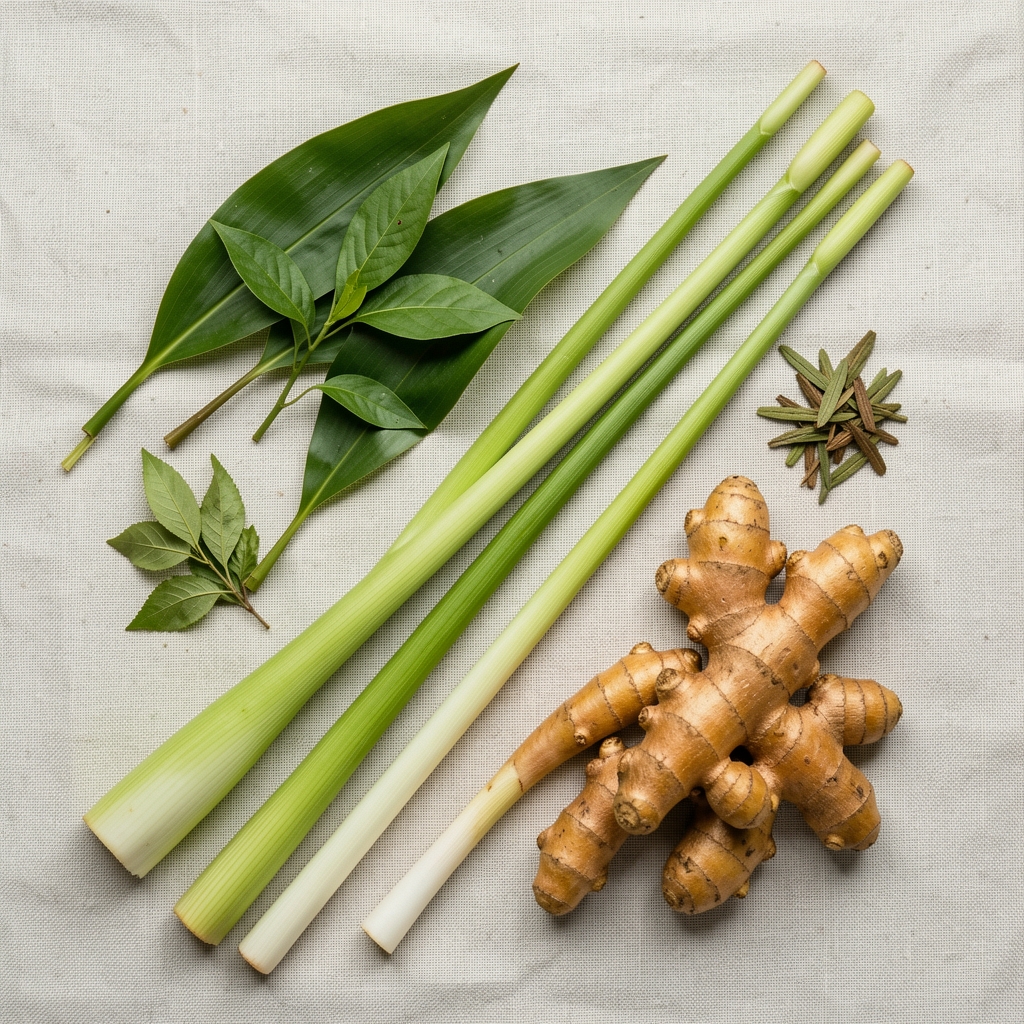
Malaysia's botanical heritage is one of the most nutritionally diverse in the region. The traditional practice of consuming ulam — a category of raw herbs and leaves eaten alongside everyday meals — has been a consistent feature of the Malay kitchen for centuries. What makes this tradition particularly relevant for men's everyday wellness notebooks is that it is not a supplement protocol or a structured programme. It is, by origin, an ordinary food habit — one that embeds nutritional variety into the daily plate without requiring any specialised knowledge or routine restructuring.
Ulam raja, known botanically as Cosmos caudatus, is among the most widely observed traditional Malaysian herbs in everyday consumption. The leaves, typically served fresh alongside rice, fish, or grilled protein, contribute a notable range of micro-nutrients to the daily plate. Published nutritional literature notes the presence of flavonoids, vitamins C and E, and iron in ulam raja at levels that contribute meaningfully to a varied whole-food intake.
For active men in Malaysia, what the editorial record reflects is a simple pattern: those who include a portion of ulam raja — or similar fresh herbs — in two or more meals across the week tend to report it as a natural extension of their food preparation, not an addition to it. The habit is associated with nutritional variety and antioxidant-rich dietary patterns when reviewed through an evidence-informed editorial lens.
Pegaga (Centella asiatica), known in English as Indian pennywort, occupies a distinct position in traditional Malaysian wellness culture. The plant appears not only in everyday food preparation but also in the broader traditional botanical literature of the Malay peninsula, where its consumption has been documented as a regular dietary inclusion for generations.
From a whole-food nutrition perspective, pegaga is a leafy green with a nutritional profile that includes vitamin A precursors, vitamin K, and a range of phenolic compounds. Its typical preparation — consumed fresh, juiced, or lightly blanched alongside a main meal — is straightforward and low-effort. The plant is widely available at Malaysian wet markets, and its inclusion in the daily diet represents one of the most accessible avenues for nutritional variety for men maintaining an active lifestyle in an urban environment.
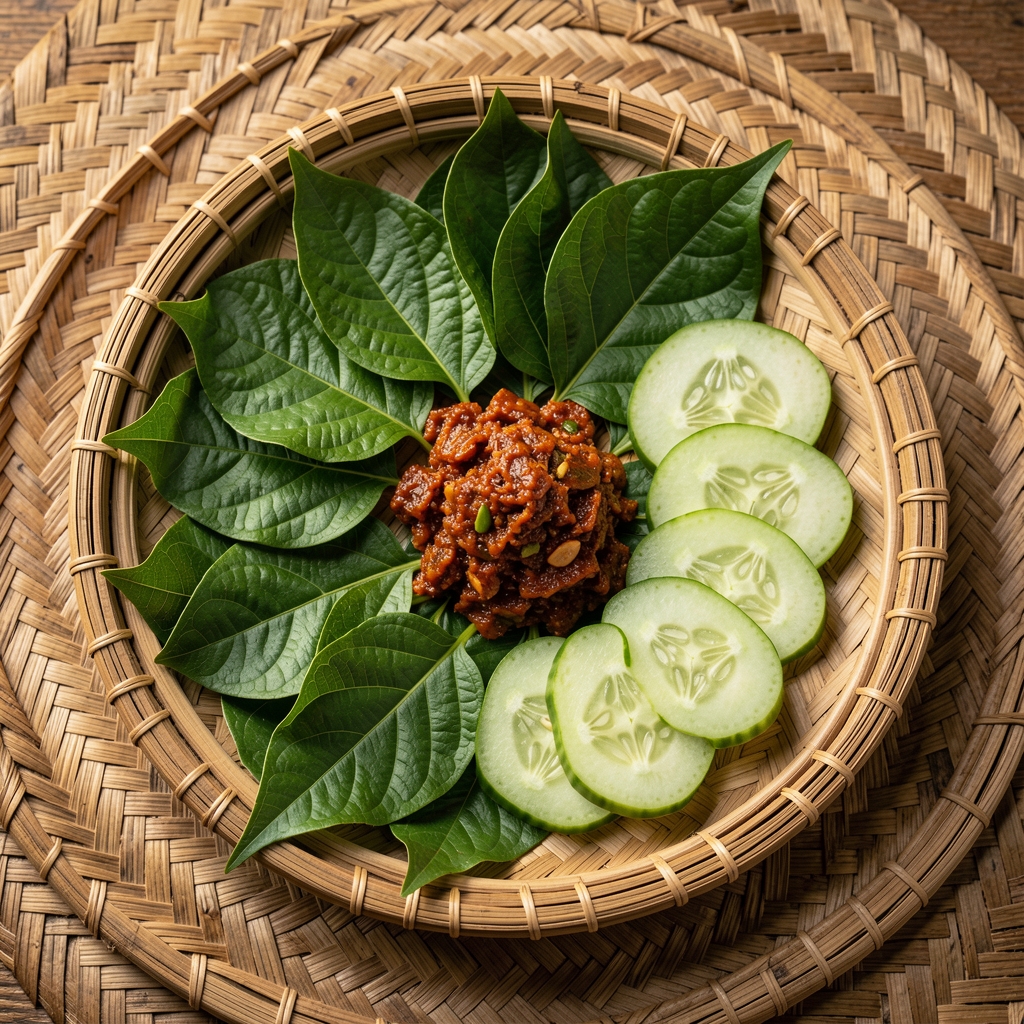
Traditional ulam platter — fresh herbs and leaves as everyday nutrition for active men.
Turmeric (Curcuma longa) and ginger (Zingiber officinale) appear throughout Malaysian cuisine — in curries, soups, and spice pastes — in quantities that make their consumption a natural, daily occurrence rather than a deliberate supplementation. Both are extensively covered in published nutritional and phytochemical research. Turmeric's active compound, curcumin, is associated with antioxidant properties in nutritional literature. Ginger is associated in published wellness research with digestive comfort and anti-inflammatory activity patterns.
What is editorially relevant here is the habit structure. Men who consume these botanicals through ordinary food preparation — rather than through isolated supplement formats — integrate nutritional variety into the daily routine without any additional effort or expenditure. The dose delivered through regular food preparation is not equivalent to what would be found in standardised extracts, but the consistency of daily dietary inclusion is itself a pattern associated with wellness in published research.
"Traditional botanical practices observed in Malaysian wellness culture represent one of the most accessible forms of nutritional variety for active men in the region."
Halia bara — the local variety of greater galangal — is perhaps less prominent in international wellness discussions than turmeric or ginger, but its role in the Malaysian kitchen is consistent and longstanding. Used in spice pastes and as a flavour base for soups and meat preparations, halia bara delivers a range of phenolic and essential oil compounds with a nutritional profile similar to but distinct from common ginger.
The editorial interest in halia bara from a men's wellness perspective is the habit layer it represents. Men who regularly prepare Malaysian home cooking — a diminishing practice in urban KL, where food court culture is dominant — tend to encounter halia bara as a standard kitchen ingredient. Its nutritional contribution is embedded in the preparation routine itself, requiring no additional awareness or supplementation habit.
Several practical patterns emerged from reviewing traditional Malaysian botanical habits across the editorial research for this article. These are observations, not directives, and are offered as editorial notes for men who are curious about integrating more traditional ingredient variety into their everyday food choices:
The editorial stance of Brandel Notebook on traditional Malaysian botanicals is grounded in what published wellness and nutritional literature reflects — not in promotional claims about specific ingredients. The research record is substantial in volume but variable in quality; many studies on Malaysian traditional herbs are conducted at laboratory scale and do not yet have the volume of human observation studies that support strong dietary recommendations.
What the record does consistently show is that traditional dietary patterns involving high plant variety, regular consumption of fresh herbs and leaves, and regular use of whole-food spices are associated with nutritional diversity and antioxidant-rich dietary patterns. For active men in Malaysia, the traditional food culture already provides the framework — the editorial contribution is simply to name it, document it, and observe how it fits into the everyday habits of men who are paying attention to how they eat and move.
As always, readers with specific considerations regarding their food choices or nutrient intake are encouraged to speak with a qualified wellness professional before making significant changes to their daily routines.
Faiz Abdullah is a Penang-born writer and food journalist covering Malaysia's traditional food culture and its intersections with contemporary everyday wellness habits. He contributes to Brandel Notebook from Kuala Lumpur.
More from this author →